Concrete damage in Utah | Wasatch Front driveway sealing | freeze-thaw cycle | professional concrete sealing Provo, Orem, Spanish Fork

Every spring, it plays out the same way across the Wasatch Front. You step outside after the last big snowstorm, coffee in hand, feeling that first hint of warmer air — and then you look down at your driveway. The smooth surface you had last fall is now pitted, flaking, and laced with cracks that weren’t there before.
It’s a gut-punch moment, and if you’ve lived in Utah long enough, you’ve probably had it more than once.
Here’s the thing: that damage didn’t happen overnight, and it wasn’t random bad luck. Utah’s climate is uniquely brutal on concrete — more so than most of the country. Once you understand why the damage happens, stopping it becomes a whole lot simpler. This guide breaks down the real science behind winter concrete damage on the Wasatch Front, what the cheap fixes miss, and how professional sealing from Utah Power Seal gives your driveway the lasting protection it actually needs.
Utah’s Climate Is a Worst-Case Scenario for Concrete
Not all cold climates are equally hard on concrete. What makes Utah’s winters so destructive isn’t just the cold — it’s the swings.
In cities like Provo, Orem, and Spanish Fork, a single January week might see overnight lows in the single digits followed by afternoons climbing into the high 30s or low 40s. That’s a 30-plus degree temperature swing happening over and over again throughout the season. Regions that stay locked in a deep freeze all winter actually stress concrete less, because the material stays in one stable state.
Our climate doesn’t allow that. Add in the high elevation and intense UV exposure during daylight hours, and your driveway is absorbing punishment from multiple directions at once, every single day.
Your Driveway Is Basically a Sponge (Here’s Why That Matters)
From the outside, a concrete driveway looks impenetrable — a dense, solid slab that could take just about anything. But zoom in to the microscopic level and the picture looks very different. During the curing process, water evaporates out of the concrete mix, leaving behind a dense network of tiny pores, capillaries, and voids throughout the slab.
That porous structure means concrete naturally draws in moisture — from rain, from melting snow, from the slushy residue that drips off your car when you pull into the garage. During summer, that absorbed moisture evaporates harmlessly. During a Utah winter, it becomes the source of everything going wrong.
The Freeze-Thaw Cycle: How Ice Destroys Concrete From the Inside Out
This is the core mechanism behind most of the driveway damage you’re seeing, and it’s straightforward physics.
Snow melts during the warm afternoon and soaks into the pores of your concrete. When the sun goes down and temperatures drop below 32°F, that trapped water freezes. When water turns to ice, it expands by roughly 9 percent in volume. Inside a rigid concrete slab, there’s nowhere for that expansion to go — so it pushes outward, creating intense internal pressure against the microscopic walls of every pore it’s sitting in.
Once or twice, high-quality concrete can handle it. But in Utah’s climate, this freeze-thaw cycle can repeat dozens of times in a single winter season. Each cycle weakens the cement paste a little more. Eventually the internal pressure exceeds what the concrete can hold, and the top layer shatters, chips, and flakes away — what contractors call spalling.
No amount of patching fixes this problem at the root. The only real solution is keeping the moisture out in the first place.
Road Salt Makes Everything Worse — Even If You Don’t Use It
Most homeowners who try to protect their concrete stop using de-icing salts on their own property. That’s smart, but it’s only half the battle.
Every time you drive home from work during or after a storm, your tires and undercarriage are carrying salt-laden slush from treated roads. The moment you pull into your driveway, that chemical soup drips directly onto your concrete. You can’t fully escape road salt on the Wasatch Front — it’s everywhere.
Here’s why it matters:
- Salt attracts moisture. It’s hygroscopic, meaning it actively pulls water toward the surface and into the pores of your concrete.
- Salt lowers the freezing point. Salt-treated water might not freeze until temperatures drop to 15 or 20°F instead of 32°F. That sounds helpful, but it actually extends the temperature range over which freeze-thaw cycles occur — dramatically increasing how many cycles your driveway goes through each week.
- Salt chemically attacks concrete. Beyond the physical damage, chloride ions from de-icers react with the cement paste itself, breaking down its chemical bonds. This is what causes scaling — that rough, sandy deterioration that makes your driveway look like it’s slowly dissolving.
What Does the Damage Actually Look Like?

Catching these issues early makes a real difference in your repair options. Here’s what to watch for:
Spalling — The surface top layer flakes or chips away, leaving a rough, uneven texture. Often starts in small patches but spreads quickly through subsequent winters if nothing is done.
Pop-outs — Small, cone-shaped holes where a chunk of concrete fractured and broke away, exposing the aggregate underneath. Caused by highly porous pieces of gravel near the surface freezing and essentially exploding upward.
Scaling — A widespread roughening and deterioration of the top layer, usually associated with salt damage. The surface looks increasingly sandy, and you may notice loose gravel or cement dust accumulating at the base of your driveway.
Widening cracks — Every driveway gets hairline shrinkage cracks over time. The danger is when water gets into those cracks and freezes. Expanding ice acts like a wedge, forcing cracks wider and deeper with every cycle. A hairline crack this fall can become a serious structural fissure by spring.
Why Big-Box Store Sealers Keep Letting You Down
The impulse to grab a bucket of sealer from a home improvement store is understandable — but it’s one of the most common and costly mistakes Utah homeowners make with their concrete.
Most off-the-shelf sealers are topical, film-forming products — basically a thin acrylic coating that sits on top of the concrete surface. They look fine right after application, but they’re fundamentally ill-suited to our climate:
- They wear off fast. Tire friction, snow shovels, and blowing grit eat through a thin acrylic film quickly. Many homeowners see failure within a single season.
- UV exposure destroys them. High-altitude Utah sunlight breaks down acrylic chemistry quickly, causing yellowing, bubbling, and peeling.
- They can trap moisture. If the concrete isn’t bone dry when a topical sealer is applied, the moisture gets locked inside. Come winter, that trapped water freezes, and the sealer shatters from beneath — leaving you worse off than before.
A topical sealer applied incorrectly can actually accelerate damage rather than prevent it.
The Real Fix: Professional Penetrating Sealers
The products that actually work don’t sit on the surface — they become part of the concrete itself.
Professional-grade penetrating sealers (typically silane- or siloxane-based compounds) have molecular structures small enough to absorb deep into the capillary networks and pores of the slab. Once inside, they chemically bond with the minerals in the cement. The result is an invisible, hydrophobic barrier that repels water from within the concrete — not on top of it.
Because the sealer bonds to the concrete at a molecular level:
- It can’t be scraped off by a snow plow or worn away by tire friction
- It won’t peel, yellow, or degrade under UV exposure
- It won’t trap moisture, because it repels water rather than sealing it in
When rain or snowmelt hits a properly sealed driveway, the water beads and rolls off the surface. It can’t penetrate the pores. And without water inside the concrete, the freeze-thaw cycle has nothing to work with. The salt damage mechanism is neutralized the same way — chloride ions can’t penetrate a hydrophobic substrate.
Why Preparation Is Just As Important As the Sealer
Even the best penetrating sealer in the world won’t work if it can’t get into the concrete. For the chemical bonding process to function, the pores need to be open and completely free of contaminants — dirt, grease, oil stains, old sealers, and biological growth all block absorption.
This is why professional power washing isn’t optional — it’s the foundation that everything else depends on.
At Utah Power Seal, we use commercial-grade, high-pressure equipment and specialized surface cleaners to strip away years of embedded grime, vehicle exhaust, and chemical residue. We degrease and prepare the substrate so the penetrating sealer can do exactly what it’s designed to do: bond deep and stay there.
Skipping this step is like painting over rust. You might not notice the problem immediately, but the failure is already baked in.
The Math: Maintenance vs. Replacement
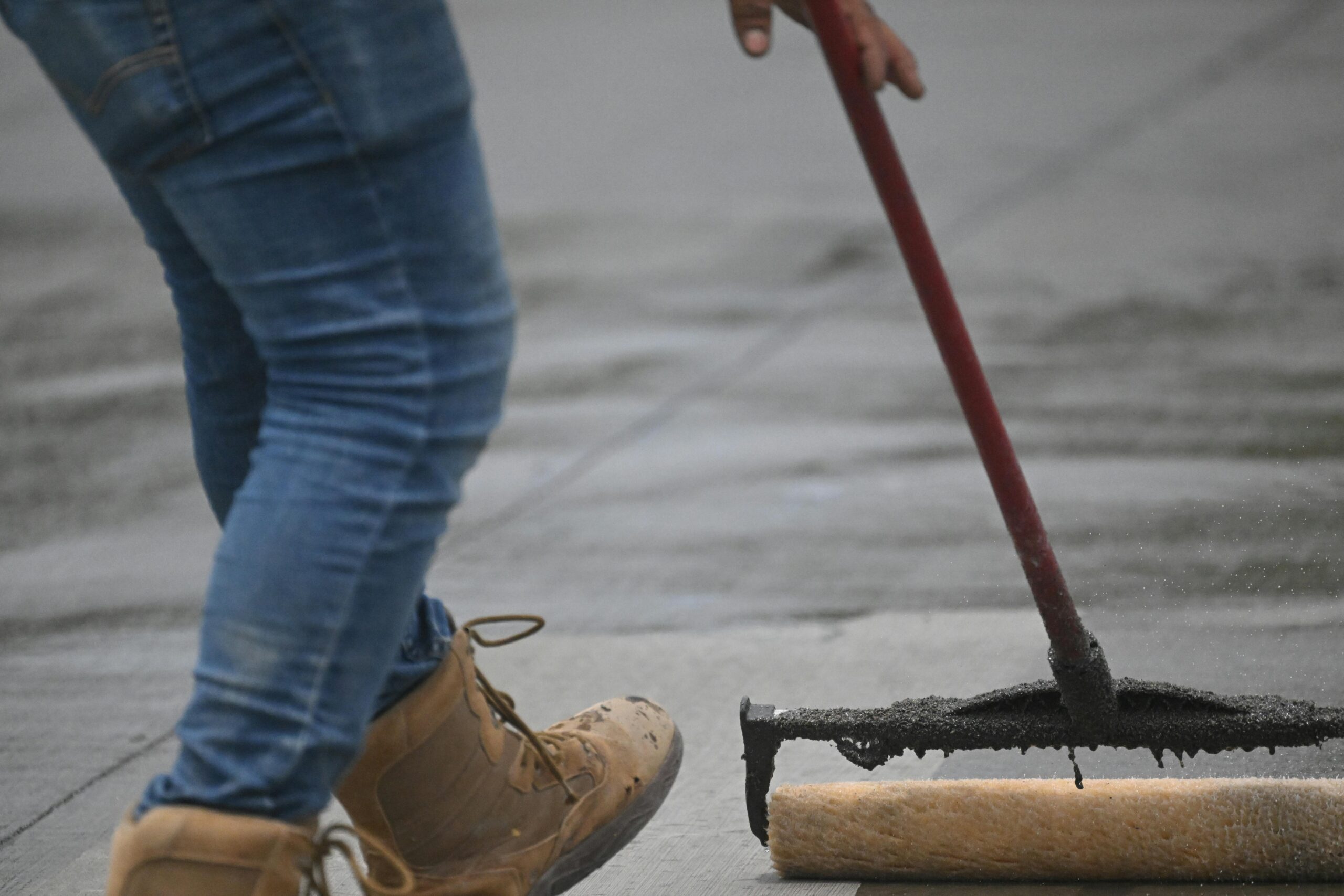
Professional concrete sealing is an easy sell once you run the numbers.
Replacing a standard two-car driveway in Utah today — accounting for demolition, debris removal, labor, and materials — can run $10,000 to $15,000 or more. That’s before you factor in the disruption: days of construction equipment on your property, potential landscaping damage, and being locked out of your garage during the curing period.
Professional power washing and sealing costs a fraction of that and takes a single day. Done on the right schedule, it can extend the functional life of your concrete by decades. In terms of return on investment, it’s one of the most efficient home maintenance decisions you can make.
The key is timing. Sealing works best on concrete that still has its structural integrity. Waiting until you see widespread spalling means you’re already past the prevention stage — and your options start getting more expensive.
When Should You Book?
Penetrating sealers need moderate temperatures to cure and bond properly. That rules out the coldest weeks of winter and the hottest stretches of midsummer.
The two ideal windows on the Wasatch Front are spring and early fall:
- Spring is perfect for washing away the salt and chemical residue from the past winter and resealing before the summer UV hits.
- Early fall is the last opportunity to lock in protection before the freeze-thaw cycles start again.
These windows are short, and experienced local contractors fill up fast. If you’re thinking about it, the time to call is now — not after you’ve spotted the damage spreading.
Protect Your Investment With Utah Power Seal
Your driveway, patio, and walkways represent a significant financial investment in your property. The good news is that protecting them doesn’t require massive spending — it requires the right approach, applied at the right time.
Utah Power Seal brings commercial-grade equipment, professional-grade penetrating sealers, and deep expertise in Wasatch Front concrete conditions to every job we do. We’re not here to sell you a temporary fix. We’re here to give your concrete the kind of protection that actually holds up through Utah winters.
Ready to stop the damage before it gets worse? Contact Utah Power Seal today for a comprehensive concrete evaluation and a free, transparent estimate. Your driveway deserves better than another brutal winter without protection.
Utah Power Seal serves homeowners throughout the Wasatch Front, including Provo, Orem, Spanish Fork, and surrounding communities. We specialize in professional power washing and premium concrete sealing services designed for Utah’s unique climate.